.svg)



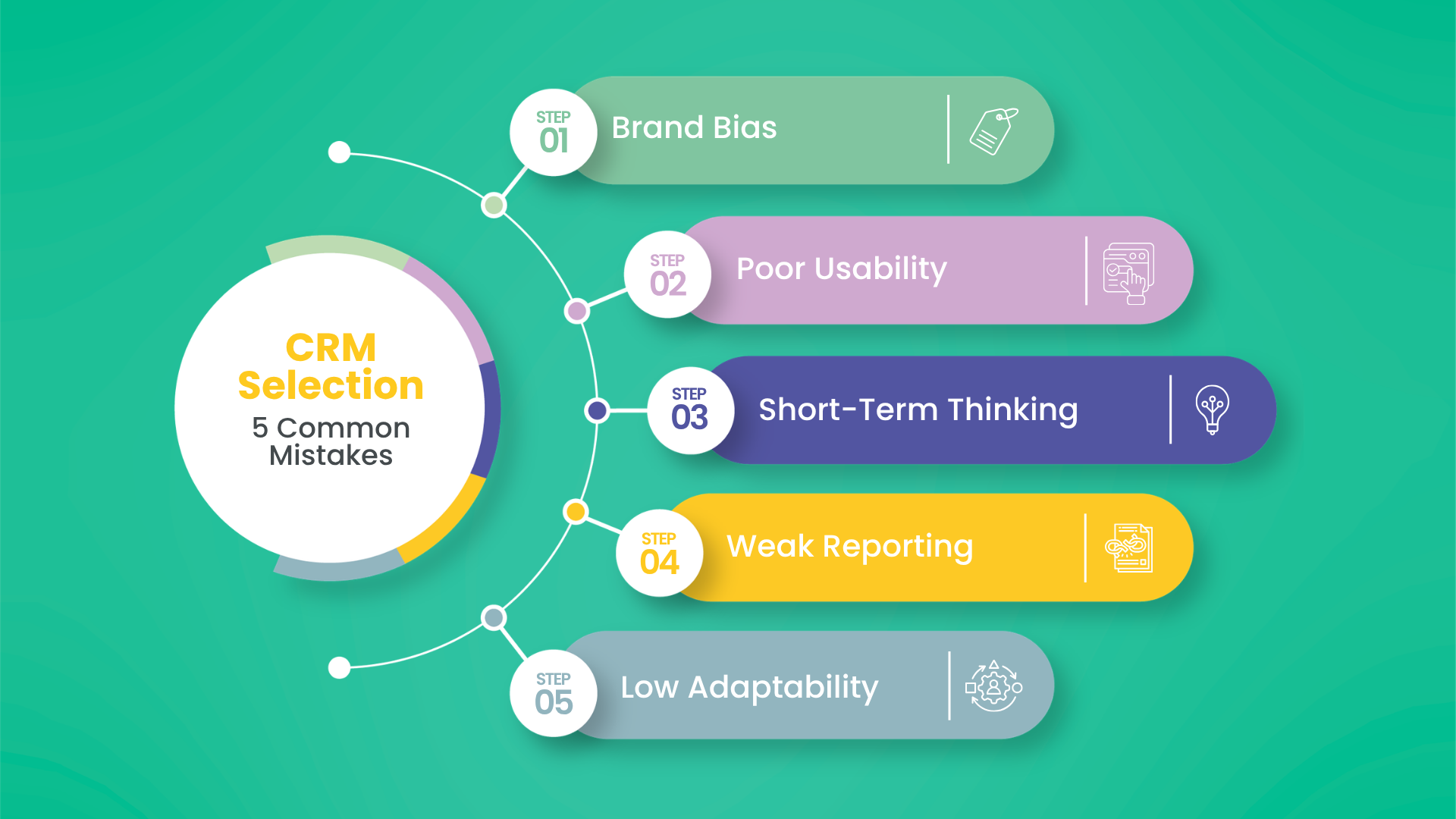
Choosing a CRM is not just a software purchase. It shapes sales discipline, team habits, and the way customer relationships are managed. Even so, many companies still make this decision based on perception instead of operational needs.
Why the wrong CRM becomes expensive
A poor-fit system does more than waste budget. It slows data entry, reduces user adoption, and weakens managerial visibility. On paper the company has a CRM, but in practice the process still runs through spreadsheets, email, and personal reminders.
The 5 most common mistakes
1. Choosing based only on brand size: The most famous platform is not always the best fit for your workflow.
2. Buying only for today's needs: Quotes, reporting, mobile use, and future scale should be considered early.
3. Underestimating usability: If the team does not adopt the system, even strong features create little value.
4. Ignoring reporting depth: Capturing data is not enough; managers need visibility and decision support.
5. Reviewing adaptability and integrations too late: The CRM should adapt to the business, not force the business to adapt.
How to choose the right CRM
Start with your real workflow: customer tracking, quote management, field use, task discipline, and reporting expectations. Then evaluate solutions through day-to-day scenarios, not just a feature checklist.
Konguru combines ease of use with process management and clear reporting. The right CRM choice should support both today's needs and tomorrow's growth.